
Superposition
2023
Immersive and powerful live performance of Rising Water, recorded at KEPK, Brisbane. Be sure to check out the concert film.
Cover art by Timothy Fairless with inspiration from Cristopher Ahern

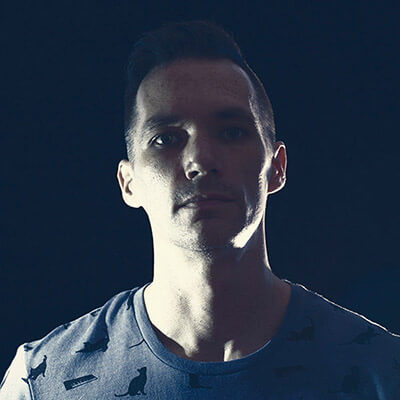
Timothy Fairless is a music-maker and video artist from Meanjin/Brisbane. Through sound and multimedia installations, album recordings, performances, and music for moving image his work engages with intersections of place, history and queerness.
Timothy has produced music and sound for film, television and theatre. This includes works with director Douglas Watkin featured at the Adelaide Biennial, multiple shows with Australian photographer William Yang at the QLD Art Gallery, RMIT Melbourne and the Seymour Centre Sydney, soundtracks for award winning short films, and a score for Our Stories on NITV. His video and installations have been exhibited in Australia and Thailand, and he has performed across Australia and in Hong Kong.
Timothy's solo recordings have been released by Unperceived Records (Berlin) and Flaming Pines (London).
Photograph by Robert Braiden

I had the absolute pleasure to perform at an ambient and experimental showcase, Other Worlds, in Hong Kong in late 2023 alongside achi, DJ Fab Sabs, Misty Penguin, and Casey Anderson. I played 2 songs with intrinsic connections to the city and my time in it. In particular, Hydrostasis, which features a granularised guzheng I recorded in hong Kong in 2019 mashed together (for this show) with a curious mix of Australian and Hong Kong field recordings.
Photograph by Fedor Yury

Live one-off performance, scoring the silent film "People on Sunday" as part of the City Symphony series at QAGOMA (Queensland Art Gallery & Gallery of Modern Art). The almost sold-out show featured more than an hour of new music.
Photograph by Mark du Potiers

A theatrical score, performed live, for William Yang's Gay Sydney: A Memoir. This iteration was commissioned for Sydney World Pride. We played a run of 4 shows at the Seymour Centre to positive reviews.
Photograph by Bruce Baker
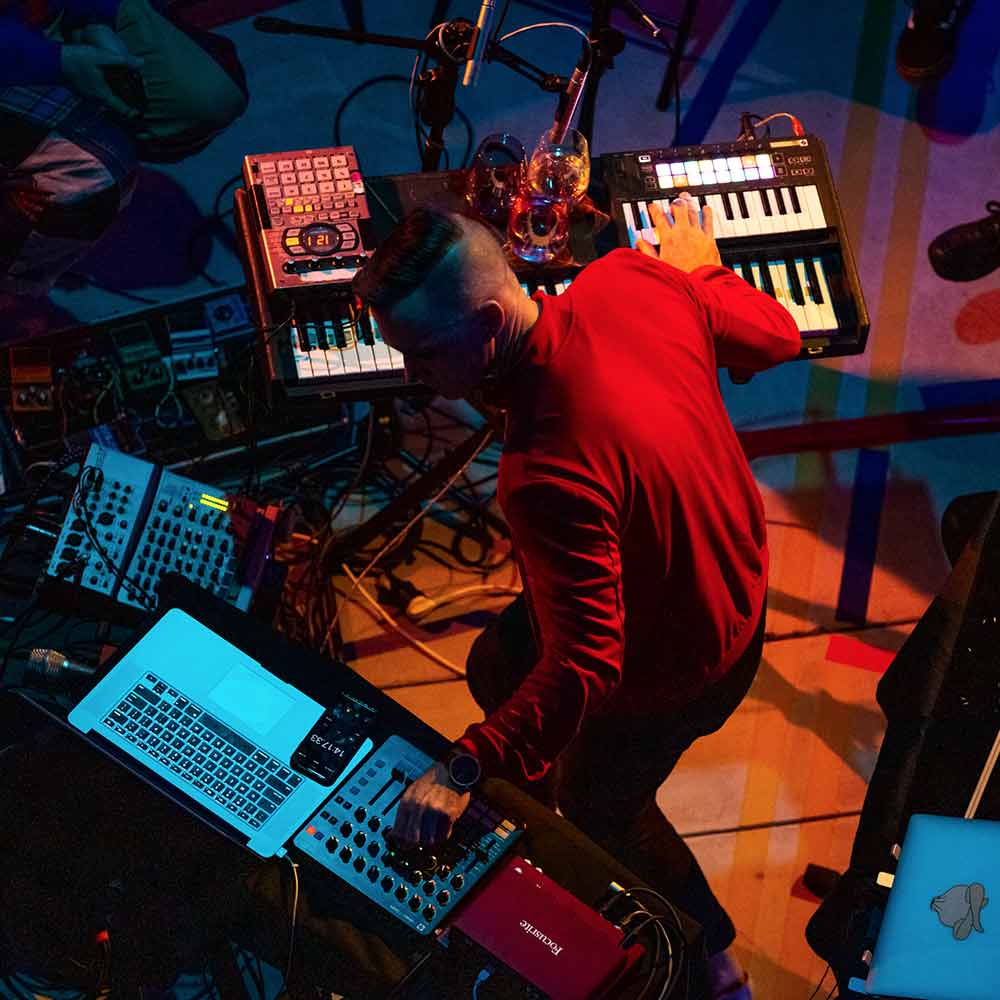
Following the release of Rising Water I performed the album twice at KEPK in Meanjin. The first show (pictured) was in-the-round and supported by Flora Wong and Lou Janssen. Sound was set from 4 channels in the corners of the room, and new album-themed animations were projected across the space so both audience and performer had the same experience. The second show was a visual treat, with the projectors split by a screen and a curved wall. The second show was with Mekema, Unregistered Master Builder, and Madeleine Cocolas.
Photograph by Thomas Oliver
Immersive and powerful live performance of Rising Water, recorded at KEPK, Brisbane. Be sure to check out the concert film.
Cover art by Timothy Fairless with inspiration from Cristopher Ahern
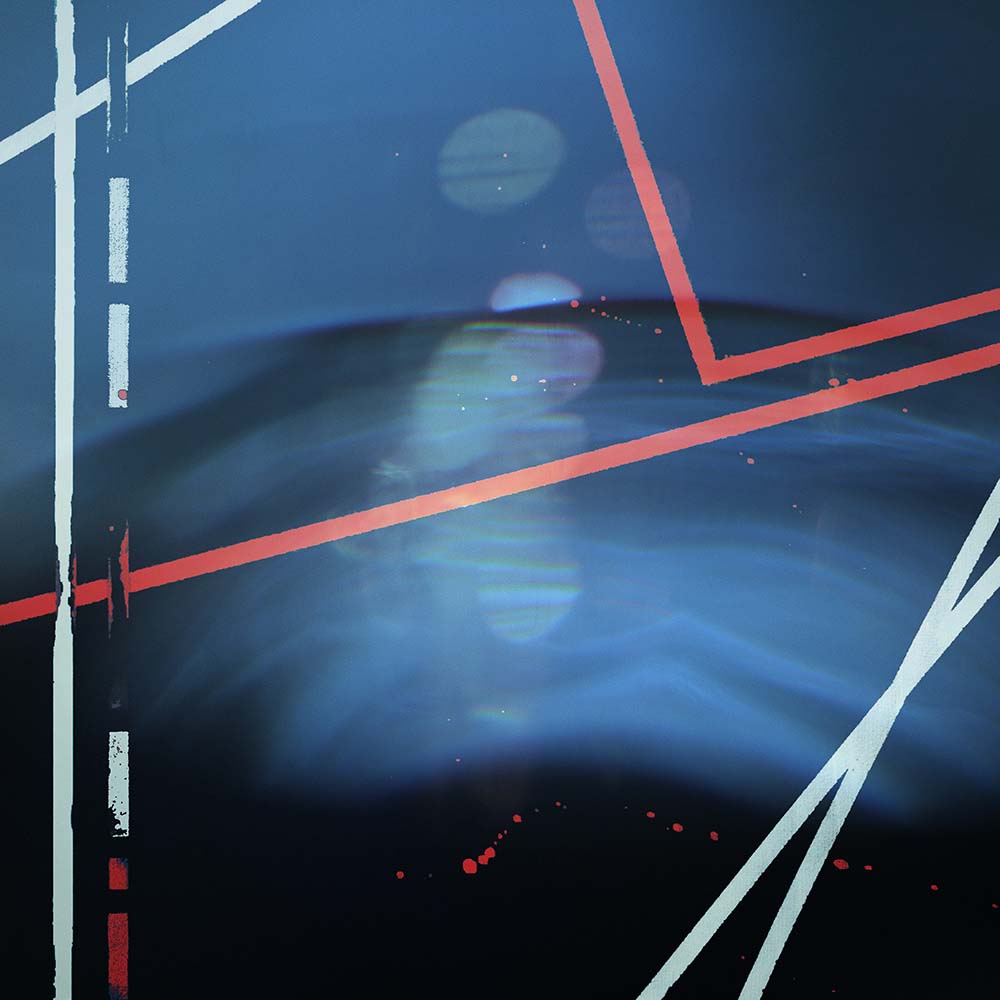
Made about water, from water. Its terror, its patience, its ubiquity and scarcity. Released on Flaming Pines, London.
Cover art by Cristopher Ahern & Timothy Fairless

Soundtrack to the exhibition. Queer identity & environment explored through treated field recordings, archival video and cassette recordings.
Cover art by Timothy Fairless

An album about diversion and distraction. Shedding reliance on familiar instrumentation, Common Electric Glare champions abstraction of tone & texture.
Cover art by Timothy Fairless

5-song companion EP to Common Electric Glare re-imagines and reveals. Minimalism, sonic abstractions, and expansions on themes and ideas explored in the album.
Cover art by Timothy Fairless

Experiments in deep sampling of acoustic instruments, and adventurous manipulation of archival audio meets electric guitar and polyrhythms.
Cover art by Daniel Mayfield-Smith

A composition for grand piano and violin maintaining the acoustic aesthetics of both instruments. Slight imperfections retained on the master convey honesty and authenticity.
Cover art by Mark du Potiers

This final release in a triptych completes a 12 song cycle that includes Measurement (2012), and Plural (2015). Although abrupt and jarring in parts, it illuminates the space around the sound.
Cover art by Christopher Ahern

A Thin Black Line is the soundtrack album for the virtual reality experience of the same name. The score accompanies a charcoal depiction of the true story of a young girl and her family fleeing Darwin before the 1942 bombing.
Cover art by Vernon Ah Kee

Bias is made of piano and processing. Performed elements were recorded without any 'traditional' playing of the instrument. Instead, the piano was stripped of non-structural outer panels and struck, plucked, and otherwise activated with a range of archaic implements.
Cover art by Mark du Potiers

Flying birds are processed to become the haunting introduction to Fault Lines. Waves recorded just north of Byron Bay become the rattling, noise-laden foundation of Holograms (Y). Grand piano and violin are nestled amongst unrecognisable sonic mush harvested from Notre Dame on the heart-wrenchingly gorgeous Pollen.
Cover art by Christopher Ahern

This debut EP of 4 songs is where you should start. Crushed leaves are stretched to become the entire ambient wash on piano-based Lumen. The knock of a finger against a microphone is transformed into the cacophonous middle passage in Decibel. Electric piano and slide guitar sit amongst a cinematic soundscape made from unrecognisable household objects on Deep North.
Cover art by Christopher Ahern

Sound & video work premiered at QCAD Galleries in the Not quite there show in 2022, and in 2024 at Logan Art Gallery with Connective Impulse. A piece expressing the relationship between the body and its environment.

Solo exhibition at The Old Lock Up about queer identity & environment. The show had 2 video/audio works and a sculptural work, was extended by a SoundCloud playlist, performance & artist talk.

Experimental performance at the group exhibition, What Matters. The work combined processed pre-recorded vintage audio mined from digital reproductions of video and current audio submitted by audience members, responded to on piano and guitar.

Collaborative exhibition with Mark du Potiers, presented as MSTR. Featured 3 new video art pieces presented as immersive audio visual installations and 2 scultpural works, alongside print work and site specific installation by Mark du Potiers.

Audiovisual installation first shown on the elevated warehouse screen at the Wide Open exhibition at KEPK Space in Brisbane.

Multi-channel audio installation as part of the You Can Lead a Horse to Water... exhibition at the Grey Street Gallery in Southbank, Brisbane. Made entirely from a glass of water, the work ran 4 discrete audio channels of differing lengths. Looped, these created an endlessly evolving soundscape.

A generative and responsive sound installation presented at the collaborative exhibition, Don't Drink the Milk with visual artists Emmalyn Hawthorne and Aaron Perkins. Exploring language and communication, Recuse for Mono listened to the gallery space and processed the audio in a multitude of ways before playing the result back into the space.

Live score for the silent film People on Sunday, as part of the Australian Cinemateque's City Symphony series at QAGOMA. Read the interview between curator Rosie Hays and myself here.

A theatrical score, performed live, for William Yang's Gay Sydney: A Memoir. This iteration was commissioned for Sydney World Pride. We played a run of 4 shows at the Seymour Centre to positive reviews.
Photo by Meg Hewitt

An ongoing collaboration with Henri van Noordenburg at the intersection of performance and the production of art, investigating the climate crisis.

Soundtrack for Ali Choudhry's video, exploring what 'home' means and where it is. First exhibited at MARS Gallery (Naarm/Melbourne) in June 2022.

Theatrical score for William Yang's performance of In Search of Home, commissioned by QAGOMA (Queensland Art Gallery & Gallery of Modern Art) as part of the major survey show William Yang: Seeing and Being Seen.

Soundtrack accompaniment to William Yang's short video Rod & Dave's Summer Party. Presented as part of the major survey show William Yang: Seeing and Being Seen at the Queensland Art Gallery in 2021.

An experimental soundtrack to the short film Silencer. The rhythm of a bouncing ball anchors the score, which features heavily processed noise and aggressive, evolving textures.

Score for the virtual reality experience directed by Douglas Watkin. The work was commissioned by SBS/NITV, produced by VRTOV & Doublewire and premiered at the 2018 Adelaide Biennial of Art. The score is made from bowed acoustic guitar, kalimba, felt piano and violin.

Score for the Fiona Wirrer-George episode of NITV's Our Stories TV program. Directed by Douglas Watkin and broadcast on NITV in 2016.

Commercial for BMW, with an electronic score made from sounds recorded from their cars and transformed into tuned and playable instruments.

Soundtrack to the short film about a single father learning how to step back to let his daughter grow up.

Soundtrack to the short film set outside a nightclub. The diegetic score drives the action and emotion while using only sub-120Hz frequencies.

A short film about revenge and freedom. The gritty soundtrack holds the tension with hybrid acoustic/electronic elements, scultped noise, and treated foley recordings.

Soundtrack to the award-winning short film about a killer seeking redemption when he intervenes in a woman burying her freshly-murdered partner.
Timothy Fairless is a composer and music-maker exploring the space where found sound and sonic manipulations intersect with familiar acoustics. As a composer, he engages schema-driven, conceptual methods. Timothy’s work is realised as sound installations, recordings, performances, and music for film.
Fairless' formative years were in regional areas. Growing up queer in the 90’s, difference and concealed identity set the foundation for a frame through which sound is interrogated as multi-layered, masked, and can simultaneously be more than one thing. Through experimental music and sound installation he explores themes of position and privilege, identity and isolation.
Solo work is published on Spotify, Apple Music, Bandcamp and most other streaming services. Installation work has been exhibited at Webb Gallery. Grey Street Gallery, and KEPK in Meanjin/Brisbane. Timothy’s soundtrack and scores have been exhibited in the Adelaide Biennial of Art, at Queensland Art Gallery’s Gallery of Modern Art (GOMA) and appeared on broadcasts for SBS/NITV, in addition to independent release. He has performed live in venues across Brisbane, Hong Kong and at the Art Gallery of SA. As a panelist, he's discussed composition for film and virtual reality at the Byron Bay International Film Festival and at the QLD State Library, and talked about creativity and AI at the Queensland Gallery of Modern Art. As a music producer, co-writer & collaborator he has worked with artists of many genres across Australia, and internationally in Hong Kong and Germany.
Timothy lives in Meanjin (Brisbane).
| Year | Description | Medium |
|---|---|---|
| 2024 | Solidarity Soundwaves - 4000 Records | Compilation |
| "You're Still Perfect" at Connective Impulse - Logan Art Gallery | Video | |
| 2023 | "Live Music & Film: People on Sunday" - Gallery of Modern Art, Brisbane | Performance |
| William Yang's "Gay Sydney, A Memoir" - Seymour Centre, Sydney | Performance | |
| "Superposition" - Independent Release | EP & Concert Film | |
| "different (The Timothy Fairless Remix)" - Fedor Yury | Remix | |
| TONDI ( ) TONDO Exhibition Closing Party - KEPK, Brisbane | Performance | |
| Other Worlds - The Aftermath, Hong Kong | Performance | |
| 24 Hour Drone Festival - KEPK, Brisbane | Performance | |
| 2022 | "Rising Water" - Flaming Pines, London | Album |
| "It's both the heat & the humidity" - The Old Lock Up, Maroochydore | Video & Sculpture | |
| Yonder Festival - The Lost World | Performance | |
| "Fragile States" - New Weird Australia | Compilation | |
| "Still Water" with Henri van Noordenburg - Dogwood Crossing, Miles | Performance | |
| Sessions at the Shangri-la - Thirteenth Eye Productions | Video | |
| "Kelp Culture" group exhibition - Project Gallery, South Brisbane and Woodford Folk Festival, Woodfordia | Sound Installation | |
| "You're Still Perfect" Not Quite There group exhibition - Project Gallery, South Brisbane | Video | |
| "I Am Home" with Ali Choudhry - Incinerator Gallery, Naarm/Melbourne | Soundtrack | |
| 2021 | "No 4AM Phone Call From Tokyo" - Loei Art Festival, Loei Province Thailand | Video |
| "Split View" - Independent Release | EP | |
| "Creative AI" - Gallery of Modern Art, Brisbane | Panelist | |
| "Common Electric Glare" - Independent Release | Album | |
| "WWWYAL" - A Country Practice | Remix | |
| Drone Festival - KEPK Space, Brisbane | Longform Ambient Performance | |
| Henri van Noordenburg's "Still Water" - Side Gallery, Red Hill | Longform Ambient Performance | |
| "CAT Scan" - What Matters Exhibition, KEPK Space, Brisbane | Audiovisual Performance | |
| William Yang's "In Search of Home" - Queensland Gallery of Modern Art | Theatrical Score | |
| William Yang's "Rod & Dave's Summer Party" - Seeing & Being Seen Exhibition, Queensland Art Gallery | Soundtrack | |
| "Revirginate" with Mark du Potiers, as MSTR - Webb Gallery South Brisbane | Video & Sculpture | |
| 2020 | "No 4AM Phone Call From Tokyo" - Wide Open Exhibition, KEPK Space Brisbane | Video |
| "Platypus Corridor - Slow Motion Electrolocation" - Andrew Tuttle | Remix | |
| "Headwind" - Independent Release | EP | |
| "Waves at South Golden Beach" - Field Recordings Podcast | Field Recording | |
| 2019 | "Pollen (Killawarra)" - Independent release | EP |
| "Sum" - Independent release | EP | |
| "Rising Water" - You Can Lead a Horse to Water Exhibition, Grey Street Gallery South Brisbane | Sound Installation | |
| "Silencer" - Cosmonaut Creative Media | Film Score | |
| William Yang's "Gay Sydney: A Memoir" - RMIT Melbourne Victoria | Theatrical Score | |
| "Made Today: Sound Composition for Film & Game" - State Library of Queensland | Panelist | |
| 2018 | Dead Air Festival - Backbone, East Brisbane | Performance |
| "Co-Lab Create VR Symposium" - Byron Bay Film Festival, Byron Bay New South Wales | Panelist | |
| "Recuse for Mono" - Don't Drink the Milk Exhibition, Webb Gallery, South Brisbane | Sound Installation | |
| "A Thin Black Line" - Adelaide Biennial of Art, Art Gallery of South Australia | Performance | |
| 2017 | "Bias I/II/III" - Independent release | EP |
| "A Thin Black Line" - VRTOV and SBS/NITV Australia | VR Score | |
| 2016 | "Fiona Wirrer George" - Double Wire and SBS/NITV Australia | TV Doco Score |
| 2015 | "Plural" - Unperceived Records, Berlin, Germany | EP |
| "Deploy Your Senses 2015" - Deploy Your Senses Label, Spain | Compilation | |
| "Eclosion" - Duskdarter Label, Brisbane | Compilation | |
| 2014 | "Measurement" - Independent release | EP |
| "Continue to Drive - Music from a BMW" - BMW Australia | TV Commercial | |
| 2013 | "Black Betty" - Creative Carps | Film Score |
| 2013 | "Bouncer" - Soap & Water Productions | Film Score |
| 2012 | "The Housewife" - Retroset Films | Film Score |
| 2011 | "True Love" - QPIX and Ignition Films | Film Score |
| "[Robots] Never Die" - Rat vs. Possum | Remix |